Context: the satellite threat already weighing on carriers
Since 2023, T-Mobile, AT&T and Verizon have lived under a growing shadow: Starlink's push into "direct-to-cell" mobile service, connecting straight to a phone with no extra antenna needed. Through 2026 that unease had already shown up in the three carriers' share prices: T-Mobile had fallen as much as 22% over 52 weeks and lost 11% since January 1, according to data compiled by Barchart, as the market digested the idea that Elon Musk intended to turn SpaceX into something more than an infrastructure supplier for traditional carriers — a direct competitor.
There was already a precedent. In September 2025, SpaceX paid $17 billion ($8.5 billion in cash and up to $8.5 billion in stock, plus roughly $2 billion in assumed debt interest) for EchoStar's AWS-4 and H-block spectrum, a deal that triggered declines of between 3% and 5% in the three major carriers that same day. That transaction was approved by the FCC in May 2026 as part of a larger $40 billion package that also included another EchoStar spectrum block being sold to AT&T.
Twelve months later, the script has repeated — but on a bigger scale.
The concrete, verified data
On Friday, October 9, 2026, SpaceX announced a deal to acquire Grain Management's entire nationwide 800 MHz low-band spectrum portfolio (up to 14 MHz of paired spectrum in the 817-824 MHz and 862-869 MHz bands) for roughly $8 billion in cash, as first reported by the Wall Street Journal. The deal, still pending FCC approval, is notable because Grain had only acquired that same spectrum from T-Mobile in August 2026, for $2.9 billion — flipping it to SpaceX for a roughly $5 billion gain within weeks.
Elon Musk called the acquisition "the last critical piece of the spectrum puzzle" needed for SpaceX to offer complete phone coverage across the United States: low-band 800 MHz spectrum penetrates buildings and walls far better than the higher frequencies Starlink currently uses, which would solve the biggest weak point of indoor direct-to-cell coverage.
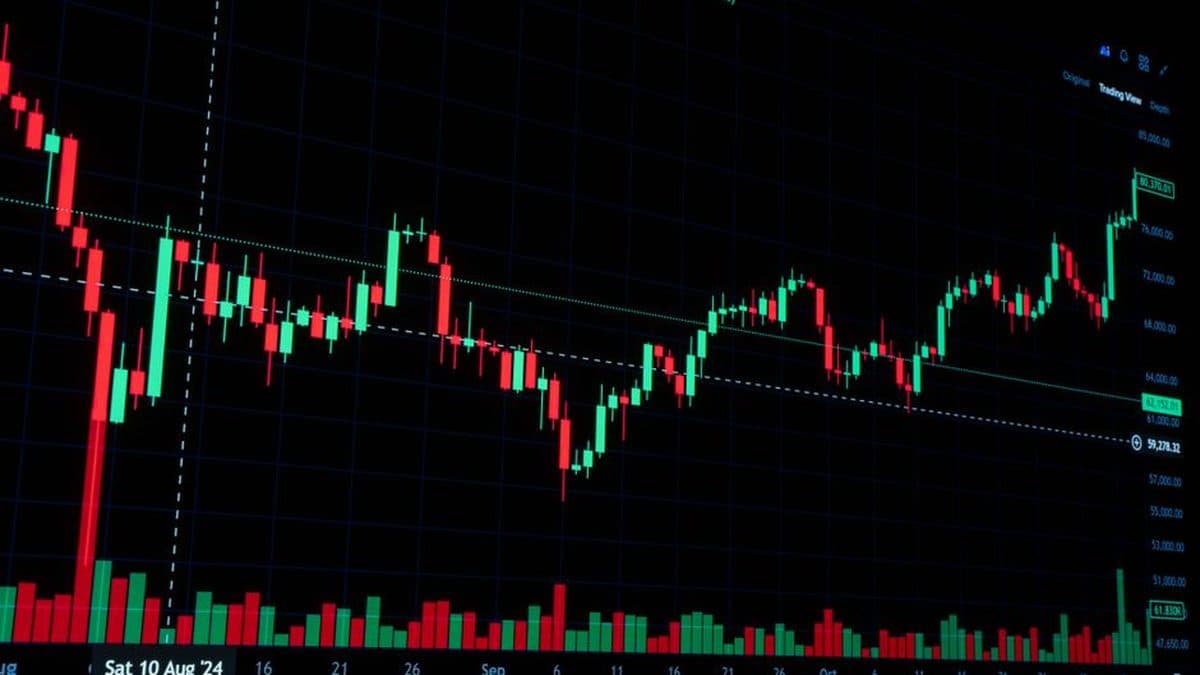
The market's reaction was immediate and far larger in magnitude than the 2025 precedent. T-Mobile fell nearly 10% intraday (from an August 21 close of $183.04 down to roughly $159.50 during the October 9 session, a new 52-week low), AT&T dropped around 6.4% and Verizon fell 5.7%, according to TradingKey and SDXCentral (citing the Wall Street Journal). Here is how T-Mobile's stock has moved through the year, including the earlier blow it took in July after results that beat profit estimates but disappointed on net-add guidance:
T-Mobile (TMUS) stock price through 2026
TIKR, Equibles, MarketBeat, Finviz
The contrast with analyst consensus is striking: heading into this news, T-Mobile carried an average "strong buy" rating from the 30 analysts covering the stock and an average price target of $244.75 — nearly 54% above the low touched on October 9. In other words, the market is pricing in, in real time, a competitive risk that much of the analyst community was still calling overblown just weeks earlier.
Sector/asset analysis: who wins and who loses on the new spectrum map
Traditional carriers (T-Mobile, AT&T, Verizon): the clear short-term losers. The market reads every new spectrum purchase by SpaceX as bringing closer the day Starlink Mobile can operate as a full-fledged carrier, without needing roaming-style agreements with incumbent operators — the arrangement T-Mobile currently has as Starlink's exclusive direct-to-cell partner. If that exclusivity deal isn't renewed or is diluted, T-Mobile would go from partner to direct competitor of the very network it helped launch.
Telecom tower REITs (Crown Castle, American Tower, SBA Communications): paradoxically, these were the day's big winners, rising between 7% and 13%. The reasoning cited by Bernstein analysts across several outlets is that the more terrestrial spectrum licenses SpaceX accumulates, the more likely it is to need physical ground infrastructure — antennas and base stations — to complement its satellite network, which would turn these REITs into landlords for SpaceX in addition to the traditional carriers. It's still a speculative bet, contingent on FCC approval of the deal and on concrete lease contracts actually materializing.
Fixed income and corporate credit: EchoStar and Grain Management are converting spectrum assets — intangibles of uncertain balance-sheet value — into cash, which improves their near-term credit profile; EchoStar itself jumped 20%-23% when it closed its own deal with SpaceX in 2025. For the carriers, by contrast, the competitive threat translates into a higher risk premium demanded on their long-term bonds if the market starts fearing a price war with a rival backed by SpaceX's financial scale.
SpaceX/EchoStar (indirect exposure via listed SATS): every deal of this kind reinforces the narrative that SpaceX is assembling, license by license, the regulatory foundation to become the US's "fourth carrier" — a scenario the consensus treated as a tail risk barely a year ago and is now starting to treat as a plausible base case.
What to watch next
- FCC approval of the SpaceX-Grain deal: there's no public timeline yet, but the pace of that review will determine when SpaceX can start deploying the terrestrial network meant to complement its satellite coverage.
- Third-quarter results from T-Mobile, AT&T and Verizon (the three carriers typically report between late October and mid-November): the market will watch closely for any management commentary on the Starlink competitive risk, as well as net-add figures, after that same metric already sank T-Mobile 10.75% in July.
- Renewal (or not) of the direct-to-cell exclusivity deal between T-Mobile and Starlink: its expiration or dilution would be the clearest signal yet that SpaceX is preparing to go it alone.
- Lease agreements between SpaceX and the tower REITs: if they fail to materialize in the coming months, the rally in Crown Castle, American Tower and SBA Communications risks reversing, since for now it rests on expectation rather than confirmed revenue.
Historical parallel: the second time SpaceX has shaken the sector in 13 months
This episode isn't the first. In September 2025, the announcement of SpaceX's $17 billion purchase of EchoStar's AWS-4 and H-block spectrum already triggered declines of between 3% and 5% in the three major carriers in a single session, while EchoStar itself surged more than 20%. That deal was approved by the FCC in May 2026 as part of a $40 billion package that also brought AT&T in as a buyer of another EchoStar spectrum block.
Market reaction on October 9, 2026, after the SpaceX-Grain deal
SDXCentral (WSJ), TradingKey, TIKR, Quiverquant
What stands out is the progression: this time the carriers' declines were notably larger (between 5.7% and 9.9%) than in the 2025 precedent (between 3% and 5%), suggesting the market is revising upward the probability that the threat materializes, rather than treating it as one-off noise. If this pattern continues — each new spectrum acquisition triggering a sharper reaction than the last — traditional carriers could face a structurally higher competitive risk premium than the one still reflected in analysts' price targets.